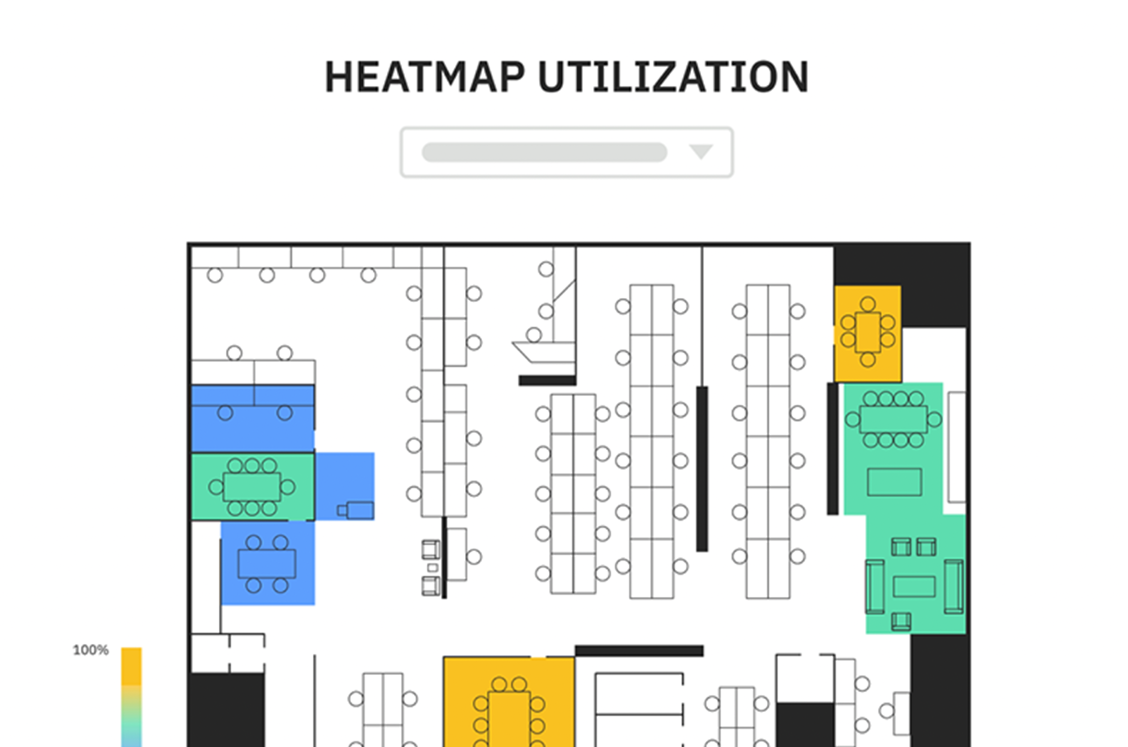
PremLink delivers on-premise occupancy data your building systems can act on
PremLink is XY Sense’s on-premise occupancy appliance.
It carries XY Sense’s market-leading occupancy signals to your BMS in under a second with no cloud loop in the control path. It outputs detections straight into BACnet/IP objects and UDMI, protocols your building already understands.
This unlocks true demand-controlled ventilation by allowing your building to respond to the exact number of people in a space in real-time, delivering better health and productivity outcomes for teams. Lower HVAC costs and building energy use. As well as an auditable occupancy record for net zero reporting and certifications like WELL.
With PremLink, your building automation sequence stays responsive to your people even through an internet outage.
Sub-second from occupancy sensor to BMS
A live enterprise deployment measures 400 to 800 milliseconds from the moment a sensor detects activity to the value appearing on the BACnet bridge. Integrations that poll a cloud API are capped by their polling interval, and those intervals are usually measured in minutes.
BACnet/IP and UDMI, natively
PremLink hosts occupancy status, headcount and percent occupied as standard BACnet objects on its own device, and publishes UDMI v1.5.2 messages to a local MQTT broker. Where there is no integration layer in the building, nothing else is needed in the path.
Keeps working when the internet drops
The sensor-to-BMS path is entirely local, so it never touches the internet. Cloud connectivity is still required for configuration, calibration, sensor health and updates. PremLink is best thought of as beng cloud resilient, not cloud independent.
Fully managed by XY Sense
XY Sense supplies the PremLink appliance, configures it, pushes software updates and monitors its health from the cloud. There is nothing for your IT team to build, credential or administer.
- PremLink Features
PremLink is built for on-premise building automation
PremLink is the first on-premise appliance to bring computer-vision occupancy intelligence to BACnet and UDMI.
It runs the XY Sense processing pipeline on a managed server inside the building and serves live occupancy as standard BACnet objects and UDMI messages the BMS already knows how to read.
No delays. No estimates. Just live, accurate, on-premise, occupancy intelligence that teams can trust and buildings can act on.
PremLink presents as a single BACnet device with a configurable Device Instance number, and answers WhoIs with IAm, so standard discovery tools find it without static IP-to-device mapping. Each space is exposed as up to three objects: occupancy status as a binary value, headcount as a positive integer value, and percent occupied as an analog value calculated against configured capacity. Change-of-value subscriptions are supported, so a room filling up produces a notification as it happens rather than at the next poll. ReadPropertyMultiple is supported, the COV subscription table persists across software updates, and PremLink emits a restart notification so compliant clients re-subscribe on their own. BACnet MS/TP, BACnet/SC and segmentation are not supported.
Values are published against spaces, so a meeting room object is a meeting room, and the integrator does not build a space model out of sensor identifiers during commissioning. Sensor data can belong to several space layers at once, which means a single conference room and a building-wide floor total are both available from the same device and can be subscribed to together with no additional setup. Space mapping is maintained centrally for the life of the deployment and appears in the BACnet server automatically as demises and fit-outs change.
PremLink operates as a UDMI gateway device, publishing occupancy and indoor air quality telemetry on behalf of proxied devices to an MQTT broker you or your implementation partner nominate. Individual sensors never connect to the broker directly. Deployments standardizing on UDMI get device identity, location and health state carried alongside the telemetry.
If the building’s internet connection drops, sensors keep reporting, PremLink keeps processing, and the BACnet and UDMI outputs keep updating using a cached copy of the configuration. Building automation carries on. What pauses is the cloud side: analytics history has a gap for the outage window, and configuration changes queued in the cloud apply once the link returns. Connection drops should be the exception rather than the operating assumption.
PremLink is deployed one appliance per building, with the supported sensor count confirmed during design against floor count, space count and sensor density. Multi-building and multi-tenant configurations are supported. Appliances are already running in production at enterprise scale, across multiple floors, feeding hundreds of mapped BACnet points into a live BMS that uses them to control airflow in litres per person and to set temperature targets in zones and meeting rooms.
ASHRAE 62.1 and CIBSE size outdoor air at roughly 6.5 to 7.5 litres per second per person. Most buildings still ventilate for design occupancy, because a live headcount has never been available at the zone. CO2-based control is an improvement, but it only reacts once concentration has already risen. An accurate count per zone, updated every two seconds, removes the estimate from the calculation.
PremLink ships as a pre-configured rack-mounted appliance built on enterprise server hardware rather than embedded gateway components, because the processing it runs was designed for cloud infrastructure. Storage and power are redundant, so a single component failure does not take occupancy-driven automation down with it. One specification is used in every region, with no country variants. Full hardware detail is in the technical specification.
Standards and controls, for the requirement matrix
Specifiers copy this into a spec or a security questionnaire, so it is set out as a list rather than described in a paragraph.
— IEC 62443 Level 3 defence in depth
— TLS 1.3 minimum end to end, with mutual TLS from sensor to appliance
— ISO 27001 certified, with annual penetration testing
— Signed firmware with controlled over-the-air update
— Role-based access control with SSO
— UDMI v1.5.2 and Project Haystack 4.0
— Outbound-only management, no inbound connections, no local CLI or SSH
Every cloud connection is outbound only. Nothing in the XY Sense cloud initiates a connection inbound to the customer network, so no inbound firewall rules are required. Sensor-to-appliance traffic is encrypted with mutual TLS, and the device authenticates to the cloud with pre-installed mTLS certificates. There is no local user interface, no CLI and no SSH. PremLink sits on a dedicated OT VLAN with no path to corporate IT, and wireless radios are disabled by default.
- Connecting to your BMS
How PremLink connects XY Sense to your BMS
XY Sense sensors report anonymous occupancy events to PremLink over the building’s own network. PremLink performs floor-level stitching, deduplication and space mapping on the appliance itself, producing live occupancy and headcount for every configured space. Those values are served locally over BACnet/IP and published as UDMI messages to your broker.
In parallel, the same sensor data is forwarded outbound to the XY Sense cloud, which keeps the analytics platform current, holds configuration and calibration, monitors sensor health and delivers software updates. PremLink checks in with the cloud roughly every minute.
Both paths run at once but only one of them is required for the BMS to keep receiving data.
Network requirements
PremLink and all sensors share a LAN or OT VLAN segment. No inbound connections from the internet are required at any point: once the outbound MQTT session is established, configuration is pushed down over it.
| Port | Protocol | Direction | Purpose |
|---|---|---|---|
| 31883 | MQTT over TLS | Inbound, sensors to PremLink | Sensor data to the local broker |
| 443 | HTTPS | Outbound, PremLink to cloud | Configuration and commands, roughly every minute |
| 8883 | MQTT over TLS | Outbound, PremLink to cloud | Sensor data forwarded for cloud processing |
| 47808 | BACnet UDP | Bidirectional, local | BACnet/IP communication with the BMS, where enabled |
| BBMD | BACnet UDP | Bidirectional, local | Only where BACnet must cross subnet boundaries |
XY Sense supports two ways to get occupancy into a building management system
Both routes deliver the same data. The sensors, the accuracy and the space model are identical either way.
What differs is how the data reaches the BMS, and what happens to it when the internet drops. Most XY Sense deployments reach building systems through our API to a smart building platform or integration layer. We build and maintain those integrations with our partners, and many enterprises are using that path today to drive sensor ROI from occupancy-driven HVAC and ventilation.
PremLink is for buildings where that layer is not an option: regulated environments, security policies that will not allow a cloud dependency in the systems running the building, and buildings where nobody wants to buy another enterprise platform to make the BMS work.
| XY Sense API into a smart building platform | XY Sense PremLink | |
|---|---|---|
| Best suited to | Buildings already running an integration or orchestration layer, or planning one | Buildings where the control path has to stay local, or where another platform is not an option |
| Where occupancy is processed | XY Sense cloud | On the appliance, inside the building |
| Latency to the BMS | Cloud round trip plus the polling interval of the receiving layer | 400 to 800ms observed in a live deployment |
| During an internet outage | The occupancy feed pauses until connectivity returns | BACnet and UDMI outputs keep updating |
| What it delivers to the BMS | Whatever the platform is configured to map and orchestrate | Occupancy status, headcount and percent occupied per space |
| Wider capability | Orchestration across other building systems and data sources | Occupancy and IAQ, published as open protocols |
| On-premise hardware | None | One managed appliance per building |
| Commissioning effort | No OT commissioning, and no device to admit to the network | Rack, power, VLAN, firewall rules and BMS integration testing |
| Commercial model | XY Sense platform subscription plus the partner platform | Appliance purchased per building plus a managed service subscription |
Most buildings are better served by one of these than the other, and the deciding factor is usually the security posture and what is already installed. Tell us about the building and we will say which one we would specify.
- PremLink is exclusive to XY Sense and engineered in-house
The XY Sense processing pipeline, moved into the building.
BACnet and UDMI are decades-old standards with well-understood behaviour. Our engineering efforts for PremLink went into compressing a cloud-scale, real-time sensor processing pipeline onto a single server in a comms room.
- CEO Opinion
Cloud or on-premise? Buildings need occupancy data from both
I think it’s about time we connected the dots and started treating occupancy data as a true operational signal, as infrastructure. This changes what we should expect from the technology underneath it.
- Use cases
What can XY Sense live, on-premise occupancy data be used for?
Demand-controlled ventilation
Fresh air is sized per occupant under ASHRAE 62.1 and CIBSE, at roughly 6.5 to 7.5 litres per second each. Most buildings still supply it for design occupancy, because the live count at the zone has never existed.
HVAC setback and zone conditioning
Condition the zone while it is occupied and back off once it empties. Most of the energy and carbon case sits here.
Live displays and wayfinding
Real-time availability on floor displays and in the apps people already use.
Cleaning and services on demand
Trigger cleaning, catering and concierge on actual use rather than a fixed round, and stop servicing floors nobody attended.
Booking release and ghost meetings
Release rooms that were booked and never used, automatically, without asking anyone to check in.
Live Air Quality & Comfort Monitoring
By integrating data from leading air quality solution providers, we’ve combined air quality metrics with real-time occupancy data to offer deeper insights into space utilization and building performance.
PremLink Solution Brief
Architecture, protocol detail, object types, port requirements and security posture, in one summary document.
Download your copy
What is On-Premise Occupancy Intelligence?
Connecting a cloud API into a building is a proposition many enterprise teams will not entertain.This guide explains why that gap exists, what the alternative architecture looks like, and how to evaluate it.
Dive in
Occupancy Sensor BACnet Integration: The Complete Guide
Most content on this topic stops at “our platform supports BACnet.” That claim is nearly meaningless on its own. BACnet support can mean a fully compliant server with COV subscriptions and cross-subnet discovery, or it can mean a nightly CSV export somebody built a converter around. The difference shows up on commissioning day. This is the detail an integrator needs before specifying. For the wider architectural context, see our guide: What is on-premise occupancy intelligence?
Explore Guide
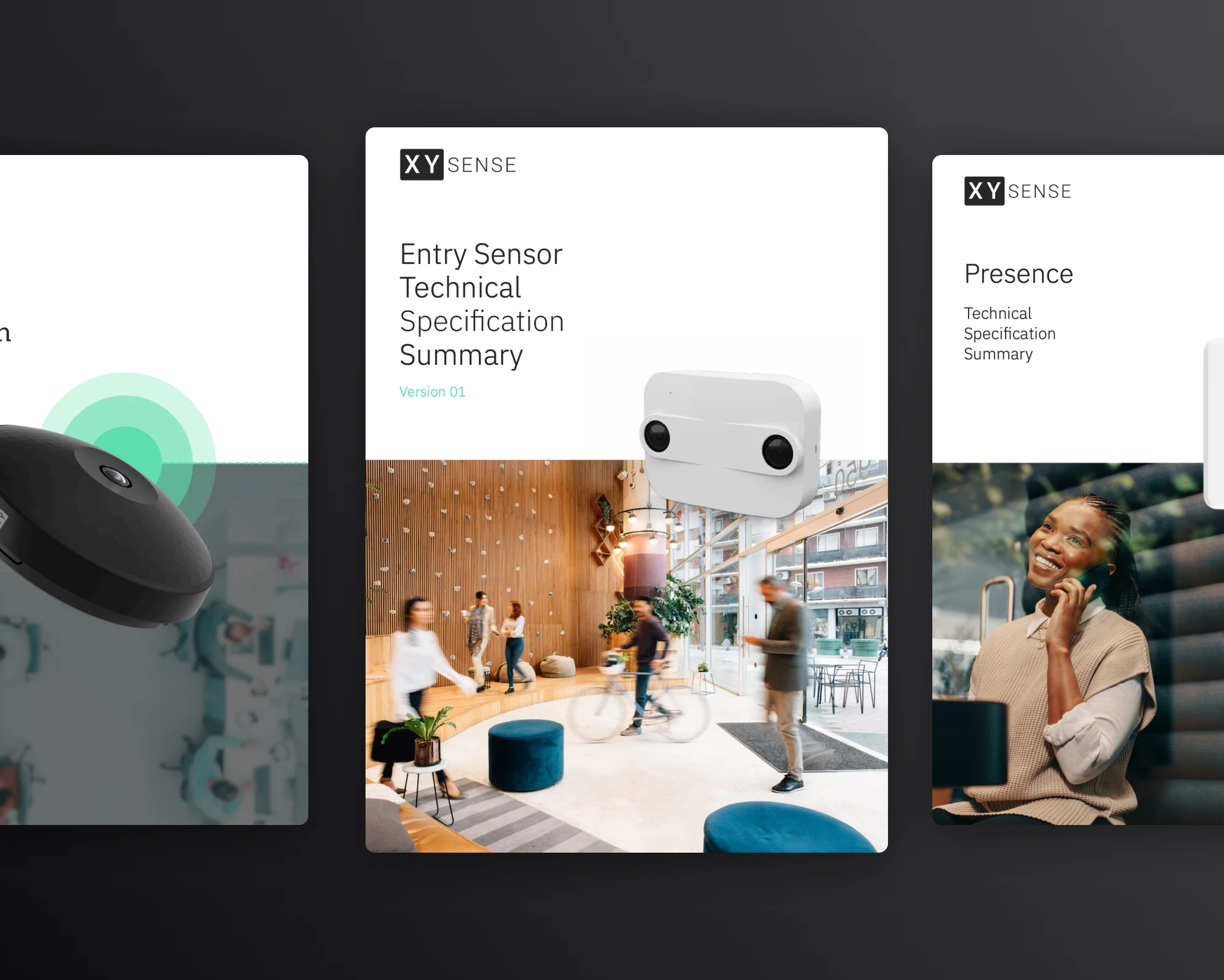
Hardware Data Sheets & Technical Documentation
Explore detailed solution briefs, data sheets and technical documentation across the XY Sense range.
Get Tech Specs- Frequently asked questions
What is PremLink?
PremLink is an on-premise appliance that makes XY Sense occupancy data directly consumable by building automation systems. It processes sensor data locally and publishes live occupancy, headcount and percent occupied over BACnet/IP and UDMI, so HVAC and ventilation can respond to actual occupancy instead of a fixed schedule.
What is a BACnet gateway?
A device that takes data from a system which does not natively speak BACnet and presents it as BACnet objects a building management system can read. For occupancy data, the gateway hosts an object per monitored space and serves those values to the BMS over BACnet/IP, typically on UDP port 47808.
Which BMS platforms does PremLink work with?
Any building management system that supports BACnet/IP or UDMI over MQTT on premise. There is no rip and replace, and no vendor-specific driver to license. If the BMS can discover a BACnet device and read its objects, it can read PremLink.
What BACnet objects does PremLink expose?
Up to three per configured space. Occupancy status as a binary value, 1 for occupied and 0 for not occupied. Headcount as a positive integer value. Percent occupied as an analog value from 0 to 100, calculated against the configured capacity of the space. Each object carries the standard required properties, and change-of-value subscriptions are supported.
Does PremLink expose data per sensor or per space?
Per space. Values are published against the spaces on the floor plan rather than against sensor identifiers, so the integrator does not have to build a space model during commissioning. Sensor data can be associated with several space layers at once, which means a single meeting room and a building-wide floor total can both be subscribed to from the same device with no extra configuration.
Does PremLink support UDMI?
Yes, UDMI v1.5.2. PremLink acts as a UDMI gateway device and publishes occupancy and indoor air quality telemetry on behalf of proxied devices to an MQTT broker you nominate. Sensors do not connect to the broker themselves.
How fast is the data?
Roughly 400 to 800 milliseconds from a sensor detecting activity to the value appearing on the BACnet bridge, measured in a live deployment. XY Sense sensors themselves update every two seconds.
Does PremLink support Project Haystack and BDNS naming?
Yes. Project Haystack 4.0 ontology tagging and BDNS-aligned naming are applied when the device is provisioned, so point names are correct on arrival rather than retrofitted during commissioning.
What is not supported?
BACnet MS/TP, BACnet/SC and BACnet segmentation. Sensor offline detection is not yet exposed to the BMS, so if a sensor drops, its BACnet value holds at the last reading with no offline flag. That is planned work, and it is worth raising during design if your sequences depend on stale-value handling.
Does PremLink still need internet access?
Yes. PremLink is cloud-resilient rather than cloud-independent. The cloud holds configuration and calibration, monitors sensor health, delivers software updates and runs the analytics platform. What does not require the internet is the live sensor-to-BMS path, which is entirely local.
What happens during an internet outage?
Sensors keep reporting, PremLink keeps processing, and BACnet and UDMI outputs keep updating from a cached copy of the configuration, so building automation continues. Sensor data is not forwarded to the cloud during the outage, which leaves a gap in analytics history for that window, and any configuration change queued in the cloud applies once the connection returns.
Does PremLink require inbound network access?
No. Every connection from PremLink to the XY Sense cloud is outbound only, so no inbound firewall rules are needed. Once the outbound connection is established, configuration is pushed down over that same connection. There is no local CLI and no SSH access.
What hardware does PremLink run on?
A pre-configured, rack-mounted appliance built on enterprise server hardware, with redundant storage and redundant power supplies. It arrives ready to connect and register, with no software installation or server configuration required by the customer. Processor, memory and storage detail is published in the technical specification.
Who installs and maintains it?
XY Sense provisions and configures the appliance before it ships. Certified installation partners handle the physical install. Software updates are delivered remotely from the XY Sense cloud, so the customer’s IT team does not manage firmware, configuration or maintenance.
How is PremLink priced?
The appliance is purchased per building as a capital item. An ongoing managed service subscription covers monitoring, maintenance and support, with XY Sense provisioning and maintaining the device for the deployment term.
What is handed over at the end of commissioning?
As-built documentation, a device schedule with GUIDs and BDNS names, O&M content and FM training, following on-site commissioning, accuracy validation and BMS integration testing. Site scoping and sensor design against architectural and BMS zoning layouts happen before install.
Do I need PremLink to connect occupancy data to my BMS?
No. XY Sense integrates with smart building platforms and integration layers through the API, and that route is supported, well proven and often the right answer where such a layer already exists or is planned. PremLink is for buildings where the control path has to stay local, where an OT security policy rules out a cloud dependency, or where nobody wants to procure another platform to make the BMS work.
Does PremLink replace a smart building operating system?
No, and it is not intended to. PremLink puts occupancy on the building network as an open protocol. Where a smart building platform is already in place, it can consume PremLink’s UDMI feed as one more source, and PremLink does not displace the orchestration that platform provides across other systems.
- Insights platform
See what’s really happening. Know what to do next.
XY Sense turns real-time occupancy data into clear insights. Helping teams make confident workplace decisions and deliver offices that are better for their people, their business and the planet.