Corporate real estate represents one of the largest expense categories for most organizations, typically second only to employee compensation. In today’s economic climate, finance leaders are increasingly looking to optimize these costs while maintaining productive work environments. Without accurate data on workspace activity, organizations risk either cutting too deeply—creating productivity bottlenecks—or missing significant cost-saving opportunities.
A recent IWG survey of CFOs revealed that 74% expect to reduce reduce commercial real estate costs for their companies this year, and 65% aim to decrease total workplace costs by more than 10%. Comprehensive workplace analytics provide the data and insight layer necessary to build an intelligent rightsizing plan. It helps leaders understand resource demand, utilization versus capacity, and other key metrics to optimize space and resources without compromising productivity.
Why You Might Need to Reduce Commercial Real Estate Costs
Organizations across industries are focusing on real estate cost reduction for several compelling reasons:
- Financial Pressure: Economic uncertainty and inflation are driving increased scrutiny of all major expense categories, with real estate being a prime target.
- Hybrid Work Reality: With many employees working remotely part-time, maintaining pre-pandemic office footprints often means paying for significantly underutilized space.
- Shareholder Expectations: Investors and boards are demanding more efficient use of capital, including optimization of physical assets like office space.
- Sustainability Goals: Reducing the office footprint directly contributes to lower energy consumption and carbon emissions, supporting ESG initiatives.
- Changing Work Patterns: The shift toward more collaborative, flexible work environments often requires different types and quantities of space than traditional office layouts.
Traditional approaches to cost reduction—such as across-the-board cuts or reactive downsizing when leases expire—often lead to suboptimal outcomes. Without data-driven insights, organizations risk cutting too deeply, creating workspace shortages that frustrate employees and hamper productivity, or not cutting enough to achieve meaningful savings.
XY Sense Area Sensors
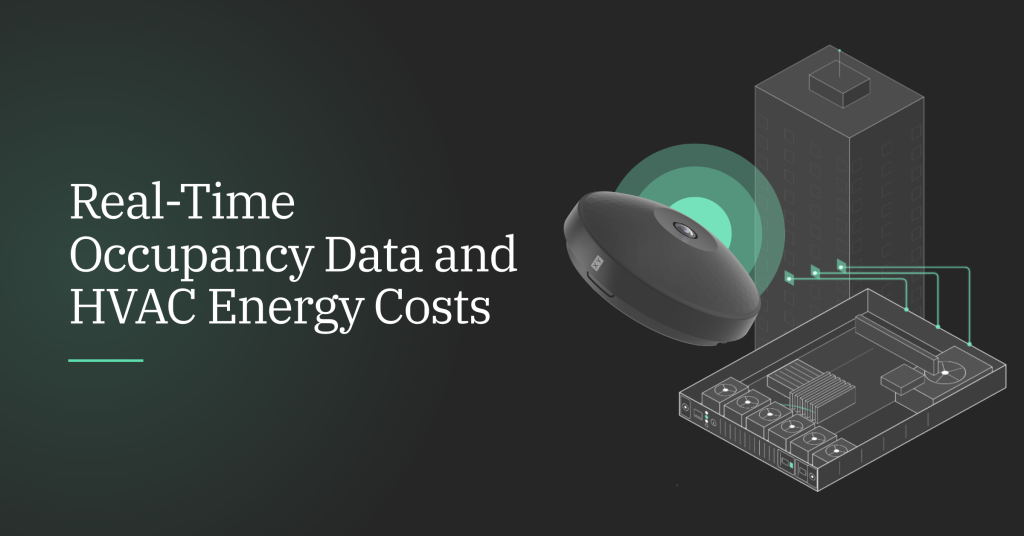
XY Sense Area Sensors provide the comprehensive utilization data needed to make informed decisions about real estate optimization. These ceiling-mounted sensors anonymously track the use of spaces, giving you precise insights into:
- Which areas and resources have excess capacity?
- How do utilization patterns vary by day, week, and season?
- Where do consolidation opportunities exist with minimal impact on operations?
- How are different types of spaces (desks, meeting rooms, collaboration areas) utilized?
The continuous, detailed data collected by XY Sense Area Sensors enables targeted cost-reduction strategies based on actual usage patterns rather than assumptions or point-in-time observations.
Essential Metrics and Reports
XY Sense’s Insights Platform delivers key metrics and reports that are critical for planning and executing real estate cost reduction initiatives:
- Benchmark Average Location Occupancy vs. Capacity: Understand baseline utilization across your portfolio.
- Benchmark Changes in Average Occupancy vs. Capacity Over Time: Track how patterns evolve in response to hybrid work policies.
- Benchmark Average Location Utilization vs. Capacity: Compare different locations to identify optimization opportunities.
- Benchmark Changes Average Location Utilization vs. Capacity Over Time: Monitor the impact of changes and initiatives over time.
- Benchmark Resource Type Utilization vs. Capacity: Identify which types of spaces are over or under-utilized.
- Benchmark Resource Type Utilization vs. Capacity Over Time: Track activity changes in how different space types.
Using Occupancy Sensors to Reduce Commercial Real Estate Costs
Target Setting
The process usually begins with the workplace or finance team setting a target for cost reduction, like reducing total real estate costs by 15%. From there, the workplace team must determine total real estate expenses to establish the baseline for the project. Your company’s FP&A team probably has these figures calculated already.
Future Needs Assessment
From there, companies need to identify how much space they need to meet current and likely future needs. Retaining too much space is inefficient, while holding too little causes stresses that hurt company productivity. XY Sense Area Sensors track utilization at the office, floor, area, and individual resource (e.g., desk) levels for essential quantitative insight. When you first deploy XY Sense Area Sensors, we map your office space so that our platform can track utilization in real time and over time. That process establishes the capacity of your office.
Benchmarking
Determine the current utilization level for your workplace by consulting the data in your XY Sense Insights Platform. Benchmark your current utilization levels for your total workplace and resource types like desks, meeting spaces, and conference rooms.Your next task is to understand what sources of potential savings are available. Are leases expiring soon, or is there a market to sublet space you don’t need? If so, reducing the office footprint can be a great source of savings.
Formulate and Execute Plans
There are many potential ways to reduce your minimum required workplace footprint. If you have a very low level of workplace utilization, you may be able to reduce space and achieve savings without deviating from the traditional 1:1 employee-to-desk ratio. If utilization varies significantly by team, you may be able to reduce the space allocated to specific teams. If your workplace attendance varies considerably by day of the week, you may consider agile seating approaches. For individuals, try hot desking; For groups, try assigning each team a compact “pod” of desks and meeting spaces based on its in-office attendance level.
Even when companies cannot change their existing real estate footprint for some time, occupancy analytics can help reduce commercial real estate costs by helping them avoid or delay obtaining more space as their teams grow. Many companies apply a conservative utilization model, targeting a figure like 60% utilization to ensure that there are always sufficient resources available for people coming to the office. Because historical methods of calculating utilization were inaccurate, companies had to err on holding too much space to avoid resource shortages. With occupancy analytics, you get an accurate picture of current utilization levels and safely raise your target utilization level.
Continuous Improvement
Once you have made changes to drive the targeted savings, continue to monitor your workplace to identify additional sources of savings. For example, many companies are exploring “floor balancing,” which refers to taking an agile approach to opening floors of a workspace based on expected attendance. An agile seating approach lets companies “close” certain floors on low-attendance days to reduce heating/cooling, utilities, and cleaning costs for those areas. Instead of fixed seating, employees on a low-attendance day are assigned to desks at arrival only on open floors.
Results and Benefits
Implementing data-driven real estate cost reduction based on XY Sense occupancy data delivers several significant benefits:
- Substantial Cost Savings: Organizations often achieve 10-30% reductions in real estate costs when rightsizing based on accurate utilization data.
- Maintained or Improved Experience: By targeting reductions to truly underutilized spaces while preserving high-value areas, employee experience can improve despite reduced footprints.
- Operational Efficiencies: Consolidating operations into optimized spaces often reduces associated costs for cleaning, maintenance, utilities, and security.
- Capital Reallocation: Redirect funds freed from unnecessary real estate expenses to strategic initiatives, technology investments, or employee experience enhancements.
- Future Flexibility: Data-driven space planning creates more adaptable environments that can flex with changing business needs without requiring constant reconfiguration.
Next Steps
Reducing real estate costs represents a significant opportunity to improve organizational efficiency while maintaining productivity and employee satisfaction. XY Sense Area Sensors provide the foundation of accurate utilization data needed to identify and execute cost-saving opportunities.
By understanding actual usage patterns across your workplace, you can make targeted reductions that minimize disruption while maximizing financial impact, creating a more efficient and effective workplace for the hybrid era.
Contact us for more information or request a demo now. Our experts would be delighted to help you explore this and other workplace analytics use cases.
Explore the brochures and solutions briefs for XY Sense products.