Welcome to WorkplaceBytes – December 2024, a rundown of articles and reports on the future of work, office occupancy trends, and how workplace leaders like you are blazing new trails as teams adjust to the new workplace.
What’s making news this month?
- Process Excellence Network explores a new theory – what if returning to the office is about aligning with the phases of the innovation cycle, not just collaboration?
- The balance between pay and flexibility is more relevant than ever. Robert Half’s latest data reveals how it played out in 2024.
- Curious about how office spaces are being used? The latest data from our quarterly Workplace Utilization Index reveals a major uptick in global office utilization and the key insights you should be aware of.
- Fiverr reports interesting new search trends, as the evolving world of work is driving a surge in demand for innovative architectural services.
- Workplace ROI is no longer just about efficiency—new insights from CBRE highlight that measuring the true effectiveness of your workplace is key.
- We all know that Friday is the happiest office day, but now we’ve got the numbers on why.
Let’s dig in.
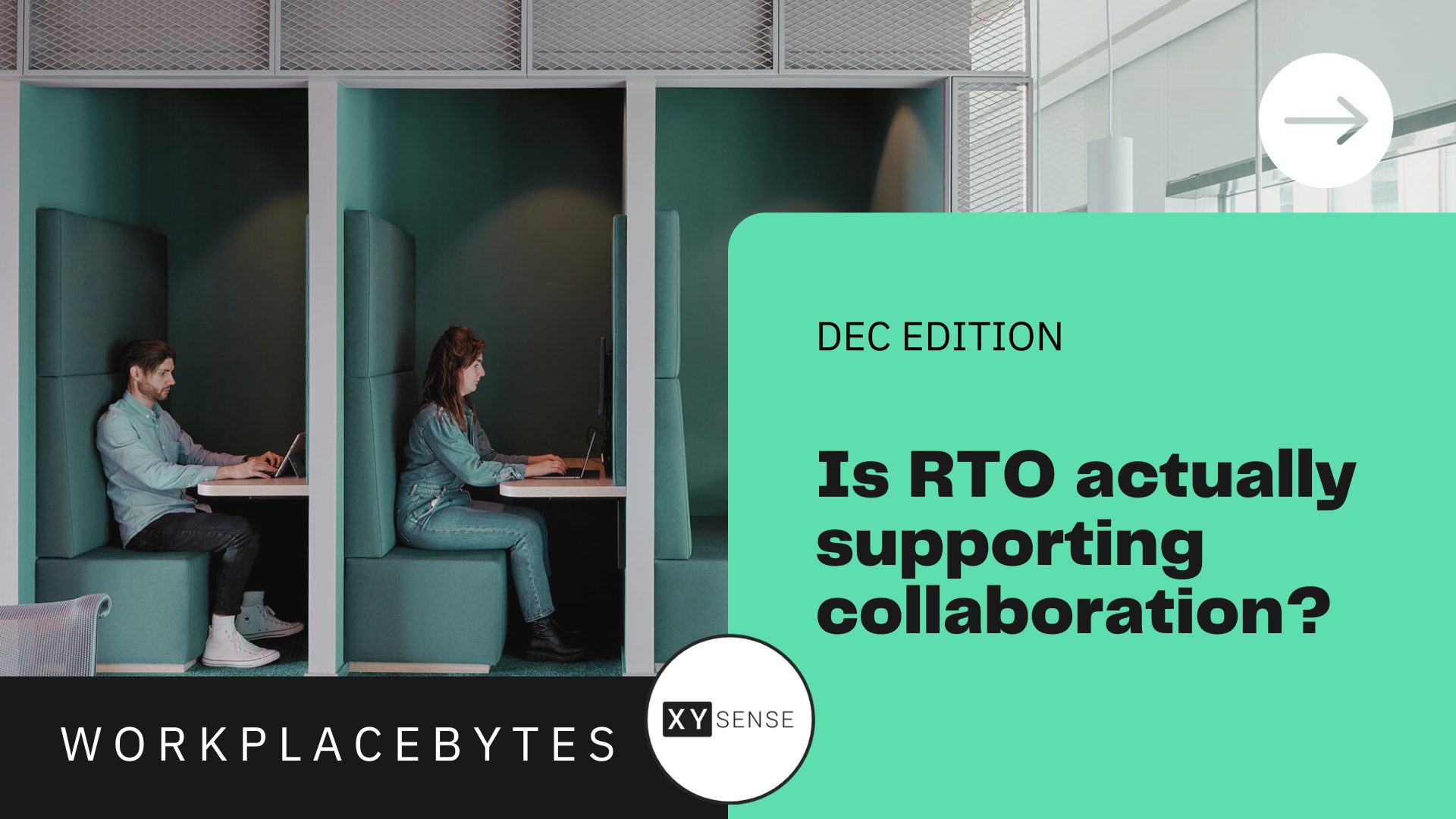
Does RTO actually support collaboration?
Collaboration. It’s the most cited reason why companies, big (Amazon, Google, and Meta) and small are mandating that employees return to the office. They argue that the best innovation happens when people are physically together.
Process Excellence Network explores a new theory: The real question isn’t whether hybrid or in-office work is better—it’s how we structure collaboration to fit the different stages of innovation. In this piece, they argue innovation isn’t a one-size-fits-all process. It has different phases that require different types of collaboration (and different physical engagement models).
- Discovery (Generating New Ideas) – This is when in-person collaboration really shines. Teams brainstorming and bouncing ideas around in person can spark creativity in ways that virtual meetings sometimes can’t. Studies even show that just one day in the office a month can boost collaboration and help ideas flow more freely.
- Development (Turning Ideas into Solutions) – Once you’ve got some great ideas, it’s time to turn them into real solutions. This phase is where remote work often comes in handy—getting into the zone to refine and perfect ideas without the distractions of being in the office. You can really focus and dig into the details from the comfort of home or a quiet space.
- Scaling (Implementing Solutions Across the Organization) – Now that the ideas are ready to roll, it’s time to bring them to life. This stage needs strong communication and collaboration across teams, and that often means mixing in-person or hybrid interactions to stay aligned and make sure everything is running smoothly as the solutions are implemented.
With this in mind, instead of a one-size-fits-all office mandate, companies may have success shifting their focus on creating a “collaboration mandate” tailored to the specific needs of each stage of the innovation process.
The balancing act: Salary vs remote work
There’s one thing both employers and employees agree on… it’s that time spent in offices is worth money. Employers are willing to pay a premium for those who spend more time in the office and employees are willing to accept a pay cut to retain their flexibility.
According to Robert Half’s latest research, 59% of companies are willing to offer a salary bump of up to 20% for candidates who come into the office four or five days a week. However, the real question is whether employees are willing to give up their flexibility in exchange for a higher paycheck.
The short answer? Not really. Employees would rather spend less time in the office. A majority—63%—of those surveyed said they’d prefer to work in the office three days or fewer each week.
In another survey by FlexJobs, half of workers said they’d be open to accepting a lower salary if it meant more remote work. Other trade-offs some are willing to make include working longer hours (20%) or sacrificing a few vacation days (15%). Among those open to pay cuts, 31% would take a reduction of up to 5%, and 18% would be fine with a cut of up to 10%.
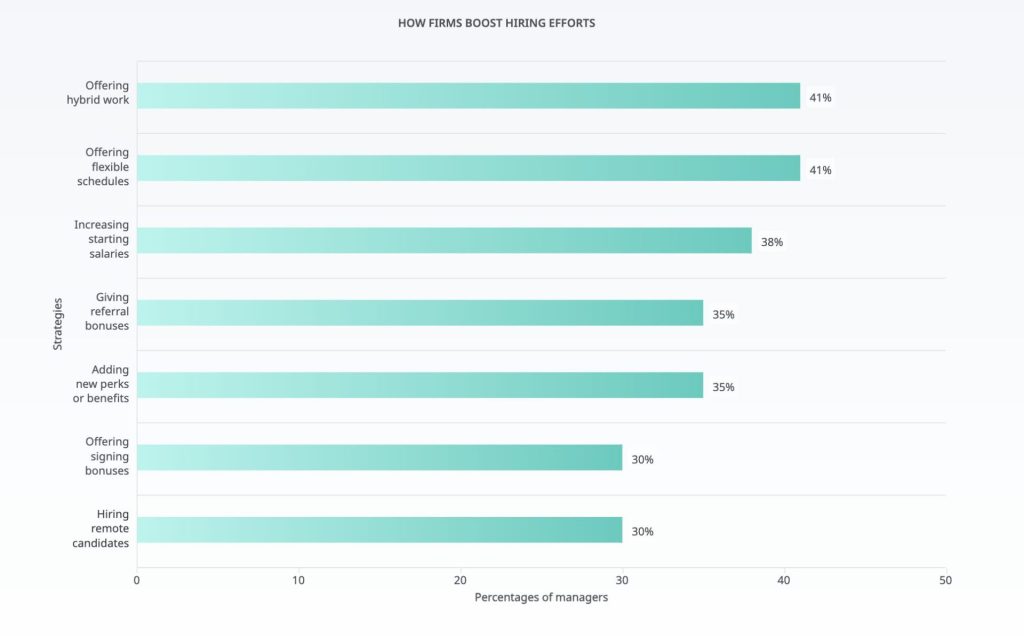
For many companies, offering hybrid work or flexible schedules has become a key strategy for attracting top talent. It seems the shift towards a more flexible work environment isn’t just a trend—it’s quickly becoming a necessity.
Where has the world been working?
The results are in from our quarterly Workplace Utilization Index, and workplace utilization in Q3 2024 is up once again!
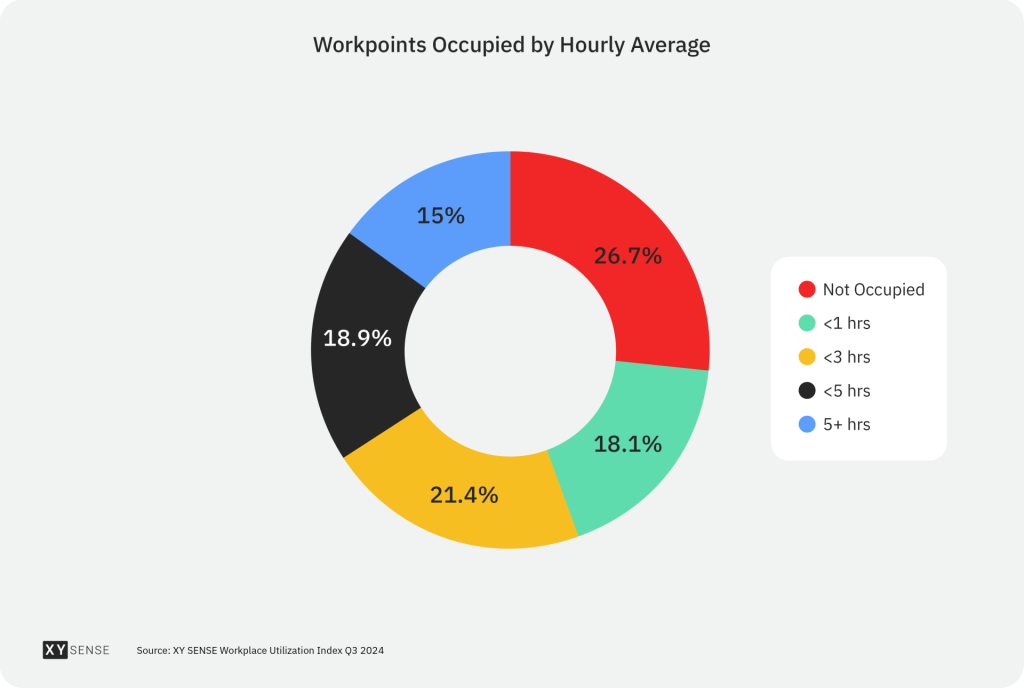
With global office use hitting 37%—that’s an 11-point jump from Q3 2023—it’s clear that more and more workers are spending time in the office compared to last year. This 42% increase year-over-year is a great sign that hybrid work policies and return-to-office efforts are really paying off.
Sure, there was a small seasonal dip in Q3 compared to Q2, but the big picture is super positive.
Here are the key takeaways:
- Workplace utilization in Q3 2024 hit 37%, up 11 points from last year. That’s a 42% increase compared to Q3 2023.
- The most popular space types were team breakout areas (65%) and enclosed meeting rooms (55%).
- 48.1% of desks were utilized for less than one hour daily.
- The trend shows that hybrid work policies and return-to-office initiatives are really taking off.
It’s safe to say that hybrid work isn’t just a passing trend—it’s become the new norm, and is sticking around.
Now is the time for businesses to re-evaluate if their office spaces have been configured to truly support team productivity in these new way of working. Check out the full report for the latest insights and trends shaping the continuously evolving world of work.

Hybrid work drives a boom in office redesigns and architectural services
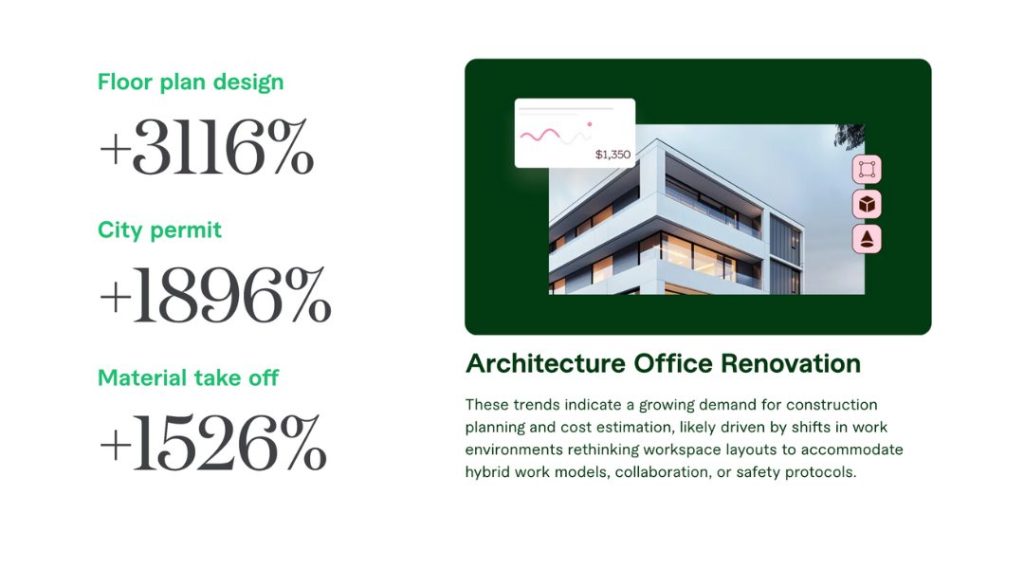
With hybrid work becoming the new norm, businesses are rethinking their office spaces—aiming for designs that encourage collaboration while still giving employees the option to work from home. This shift has led to a huge spike in demand for architectural services, especially when it comes to things like floor plan design, city permits, and cost estimates.
Fiverr’s latest index shows a huge rise in searches for these services, with floor plan design searches jumping by over 3,100%. It’s clear that companies are investing in creating flexible, multifunctional spaces that can work for both in-office teams and remote workers who come in for meetings or collaboration sessions.
The growth in the global office furniture market is another big sign that office redesigns are on the rise. It’s expected to grow from USD 5.20 billion in 2023 to USD 9.27 billion by 2030, with a solid annual growth rate of 6.24%. What’s driving this boom? The shift to hybrid and remote work, a bigger focus on employee well-being, and all the tech and designs making offices more flexible and comfortable.
The rise in workplace experience and effectiveness, over efficiency
CBRE have dropped the first part in their 2024-2025 CBRE Global Workplace & Occupancy Insights series.
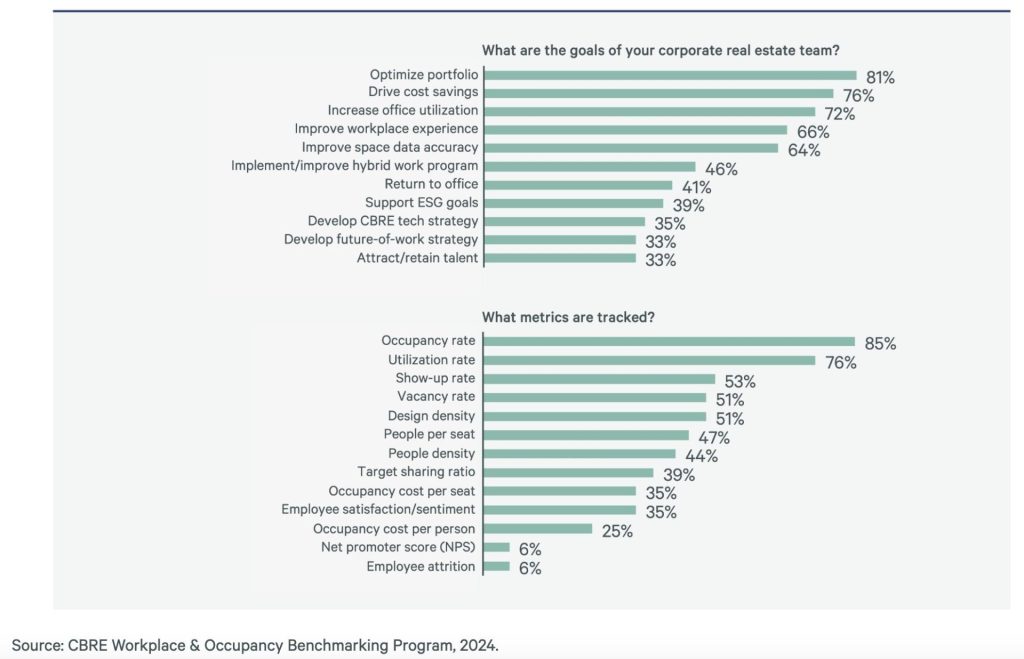
Their latest findings show a shift in workplace metrics. In the past, cost efficiency was the go-to metric for many organizations looking to evaluate their office spaces. The emphasis was on how well resources were being utilized—how much space was occupied, how often it was used, and how many employees could be accommodated in a given area. However, as workplace dynamics have shifted, organizations are now recognizing that effectiveness, not just efficiency, is the real key to measuring success.
According to CBRE’s research, effectiveness in the workplace is being increasingly tracked by companies across industries. Effectiveness refers not only to how the space is used but also to how it fosters productivity, collaboration, and employee satisfaction. As businesses face a changing landscape, it’s clear that a one-size-fits-all approach to real estate isn’t sufficient. Instead, organizations are focusing on what really drives value for their teams.

Who’da thought!? Friday is the happiest day to work from the office
A recent study by Making Moves, surveying 2,000 office workers, reveals Fridays as the happiest office day, favored by 28%, compared to Mondays and Wednesdays at 15%.

However, XY Sense’s Q3 2024 Workplace Utilization Index reveals Friday are still the least attended office day.

The contrast raises a question: are workers missing out on the joy of a collaborative Friday by choosing flexibility? With Fridays offering a boost in morale and productivity, it might be time to rethink the flexible Friday—and reclaim the happiest day at work!
That’s it for this month’s edition of Workplace Bytes. We hope you enjoyed the read.
Sign up here to get this newsletter delivered straight to your inbox.